
📅 Date: 5 March 2026
The third and final session of the Professional Development (PD) programme focused on the practical implementation of data science in real classroom settings, highlighting how the DataScEd4CiEn approach can be applied across different countries, age groups, and subject areas.
Classroom Implementation Across Europe
The session was led by educators and researchers from partner schools, including:
- La Salle-Buen Consejo (Spain)
- The English School (Cyprus)
Participants gained valuable insights into real classroom applications, exploring how data science and STEAM methodologies were implemented in authentic learning environments.
STEAM Scenarios Addressing Social Justice
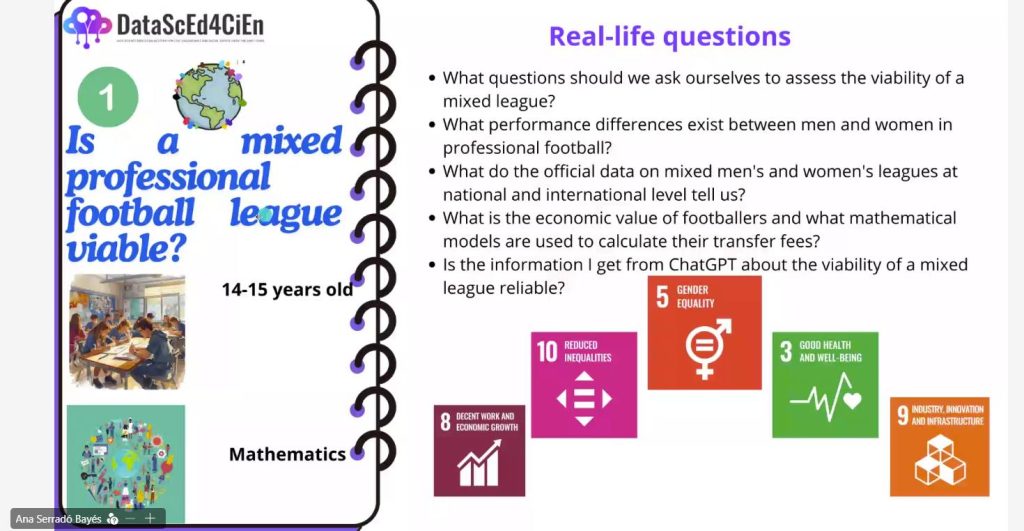
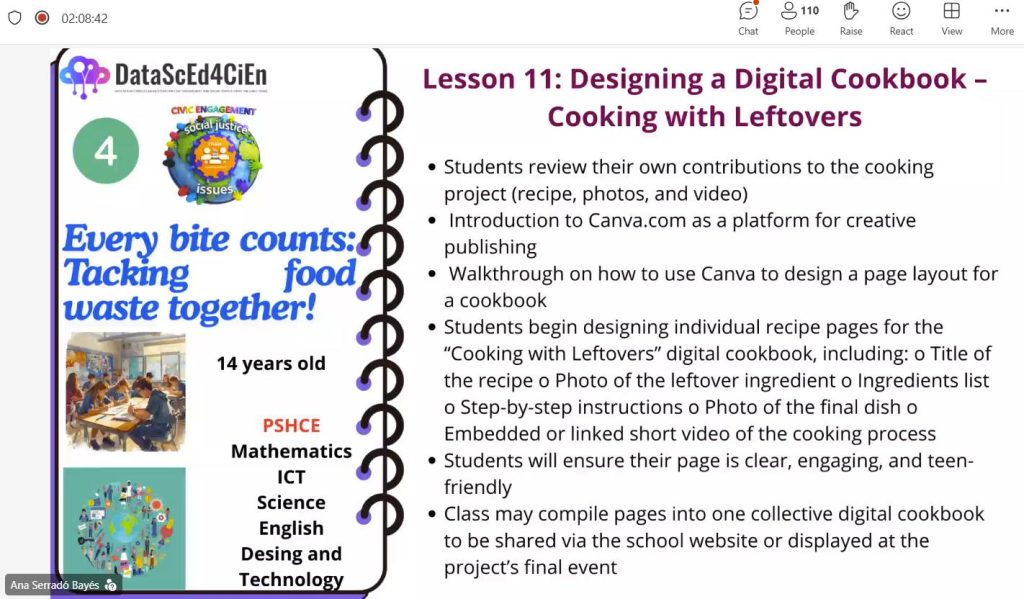
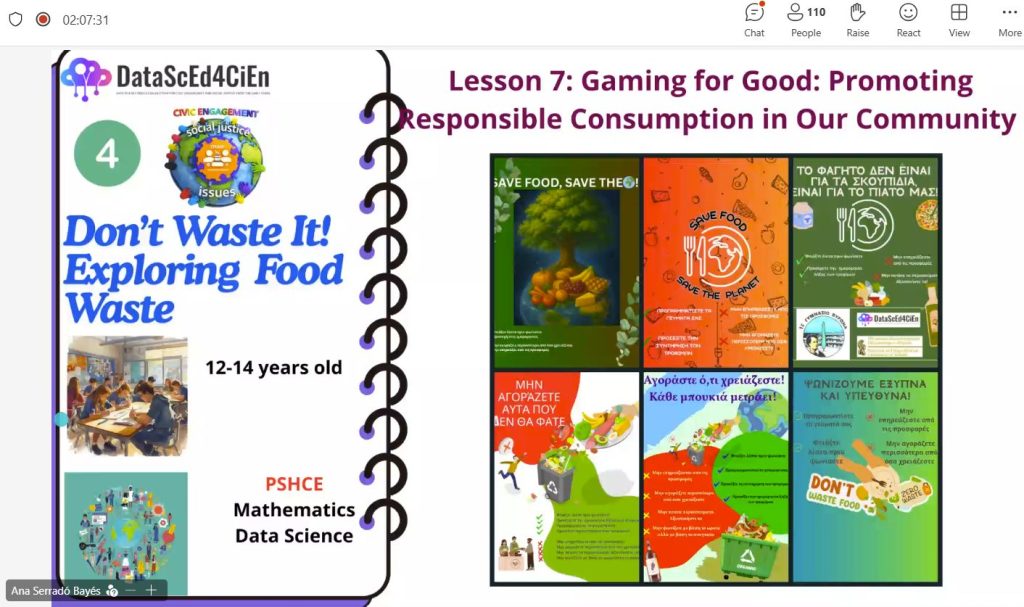
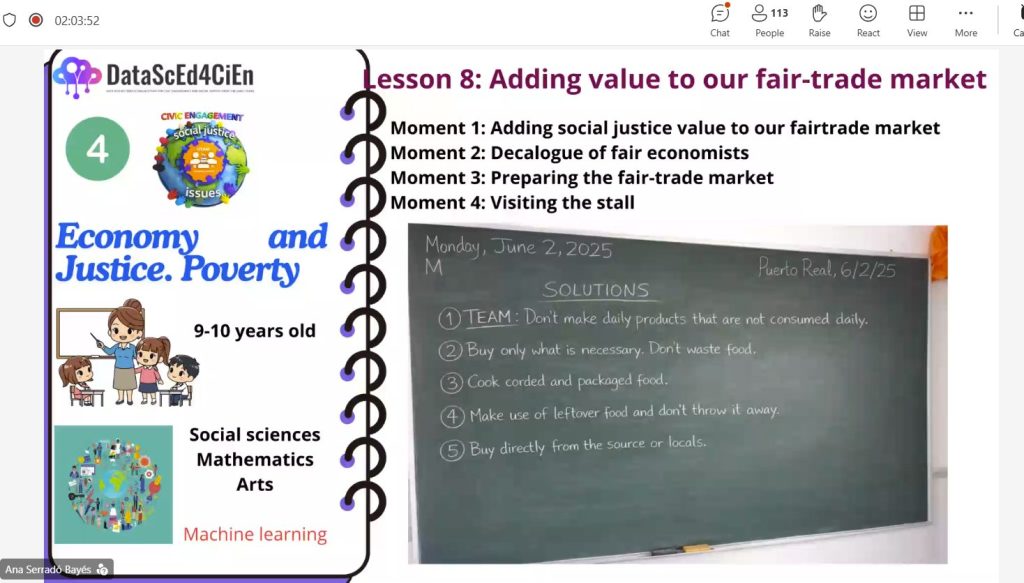
A wide range of educational scenarios was presented, demonstrating how data science can be used to explore real-world challenges and social justice issues. These scenarios were designed for different age groups and connected to the UN Sustainable Development Goals (SDGs).
Indicative examples included:
- Migration and globalisation
- Gender equality in sports
- Food waste and responsible consumption
- Climate action and environmental sustainability
- Earthquake prediction and risk awareness
Through these examples, participants saw how students can engage in data-driven inquiry while developing critical thinking and civic awareness.
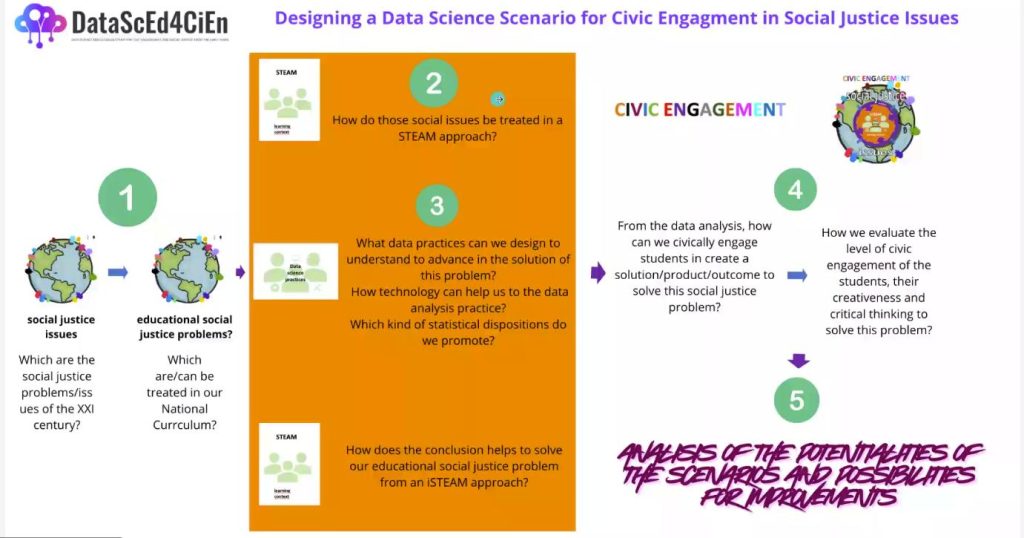
From Social Issues to STEAM Learning
Prof. Ana Serrano Bayes demonstrated how complex societal challenges can be transformed into meaningful learning experiences using a STEAM approach. Emphasis was placed on:
- Interdisciplinary collaboration across subjects
- Connecting data science with real-life contexts
- Encouraging reflection on social justice issues
Data Practices in Action
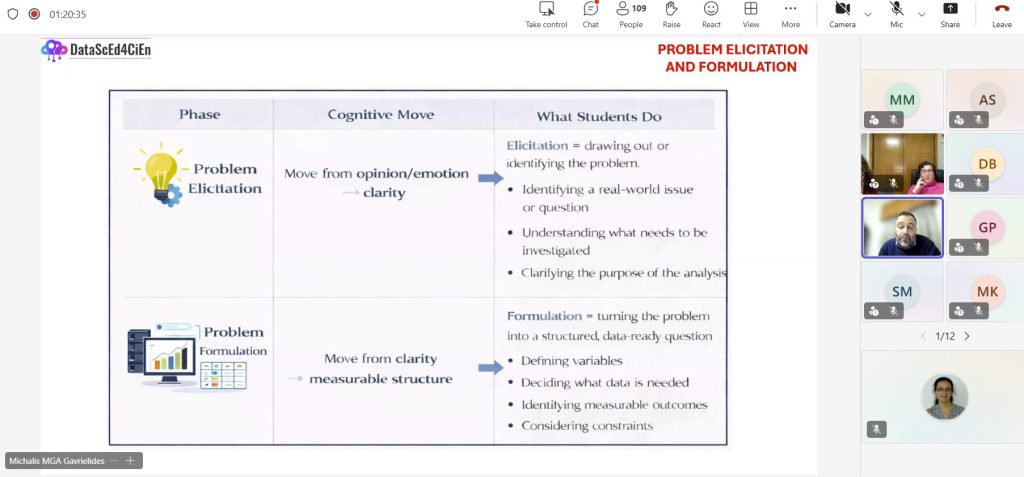
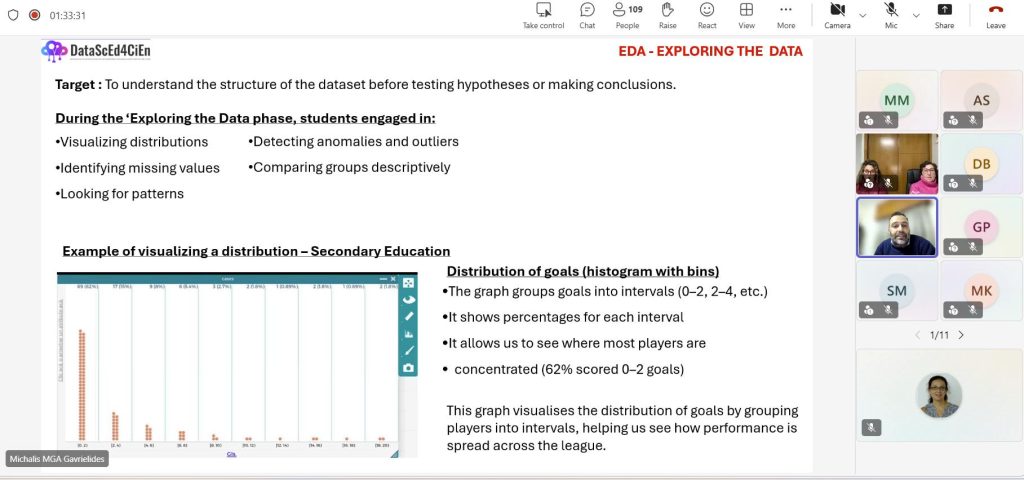
Michalis Gavrielides guided participants through key data practices within STEAM scenarios, including:
- Problem identification and formulation
- Data collection and analysis
- Interpretation of results
- Communication of findings
These steps illustrated how students can engage in the full cycle of data inquiry and evidence-based reasoning.
Project Outcomes and Impact
Maria Lucia Vargas presented the project outcomes of the STEAM initiatives, showcasing results from classroom implementations and the educational impact across participating countries.
Key Takeaways
The session highlighted that:
- Data science education is most effective when it is interdisciplinary and context-driven
- Social justice issues provide powerful and relevant learning contexts
- Students benefit from engaging in authentic, inquiry-based activities
Conclusion
The final PD session demonstrated the strong impact and practical value of the DataScEd4CiEn approach, reinforcing its potential to support educators in integrating data science into STEAM education.
It also marked an important step towards building a transnational community of educators, committed to promoting data literacy, critical thinking, and active citizenship through innovative teaching practices.
