
📅 Date: 9 February 2026
The second session of the Professional Development (PD) programme built on the foundations established in the first meeting, offering participants a hands-on exploration of tools, methodologies, and emerging technologies for teaching data science within STEAM education.
Data Exploration in Practice
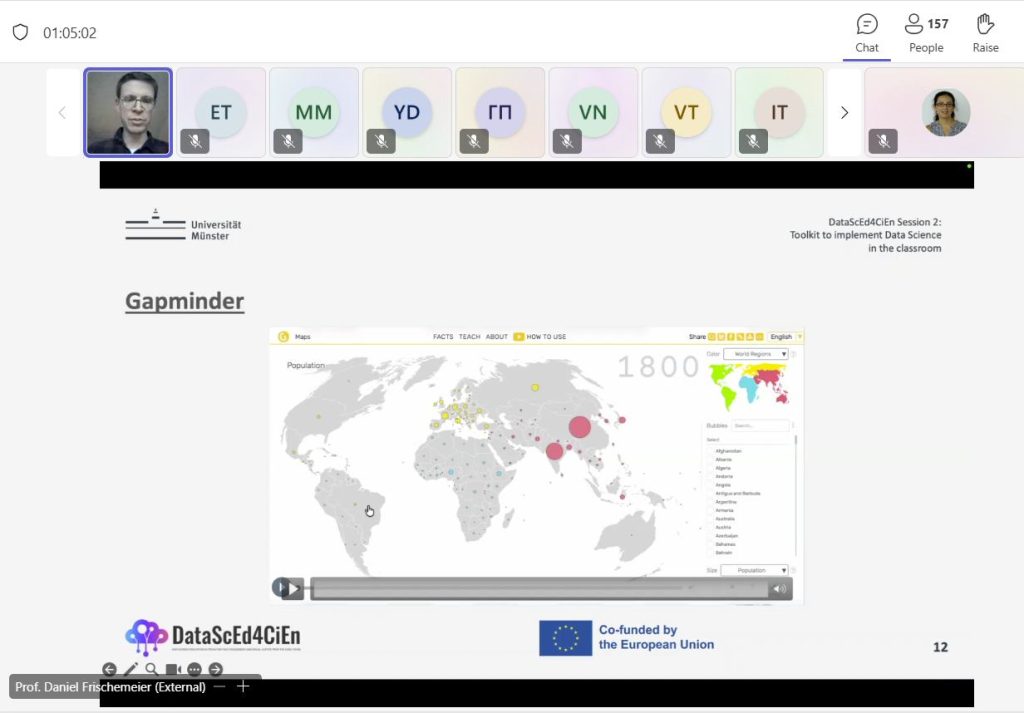
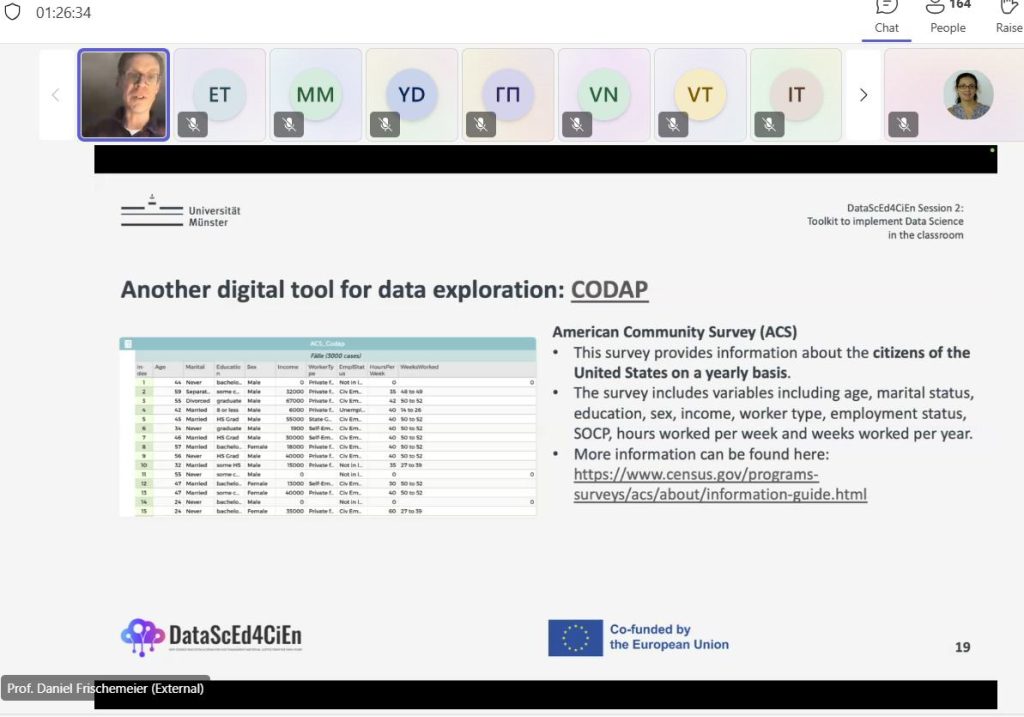
Prof. Daniel Frischemeier led participants through practical approaches to implementing data science in the classroom. A key focus was on the use of CODAP (Common Online Data Analysis Platform) as an accessible tool for data exploration.
Through live demonstrations, participants explored how to:
- Create and interpret graphs and visualisations
- Analyse distributions using measures such as mean and median
- Use representations like bar charts and box plots
- Investigate real-world issues, such as the gender pay gap, through data
The session emphasized that the focus in teaching should not be on tools alone, but on interpreting data, drawing conclusions, and fostering critical thinking.
Finding and Using Data
Participants were also introduced to strategies for identifying and selecting relevant datasets to support inquiry-based learning in STEAM projects, enabling students to engage with meaningful, real-world questions.
Artificial Intelligence and Machine Learning in Education
The session continued with a strong focus on AI and Machine Learning in educational contexts:
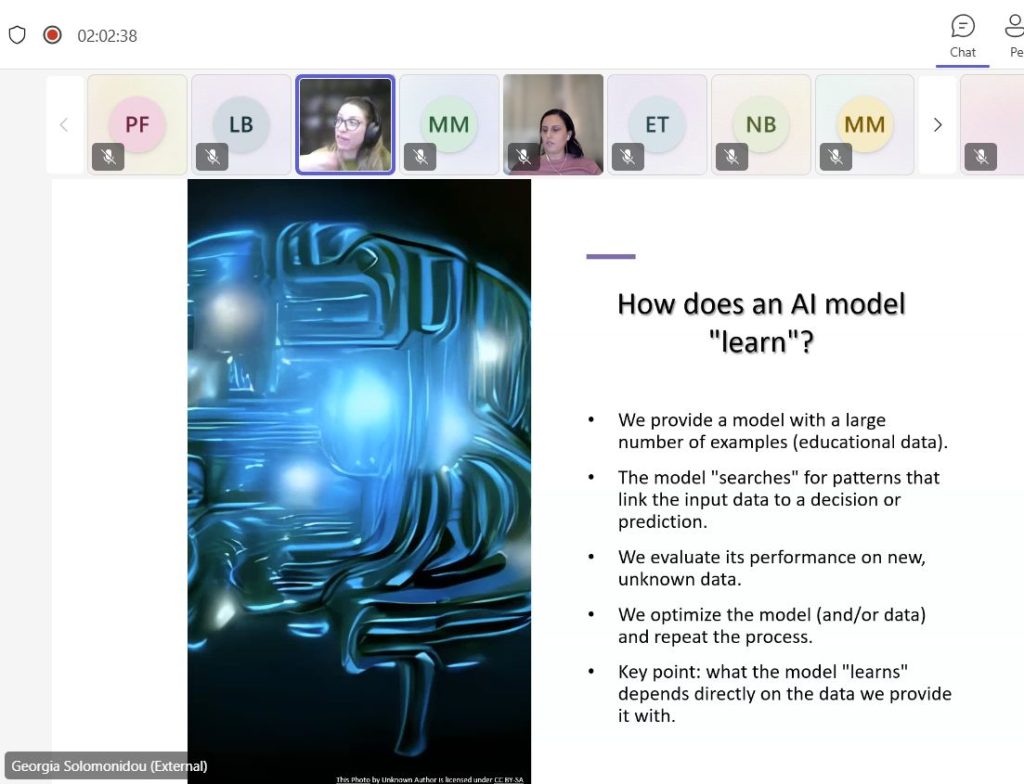
- Dr Georgia Solomonidou presented both the opportunities and challenges of AI in education, encouraging critical reflection on its ethical implications
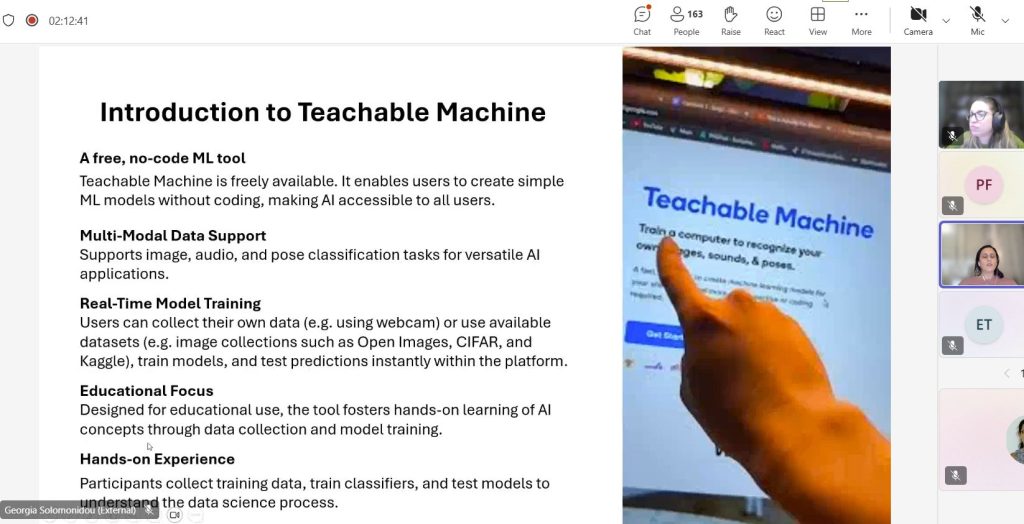
- Dr Yianna Danidou introduced Teachable Machine, demonstrating how simple models can be trained and tested in classroom settings
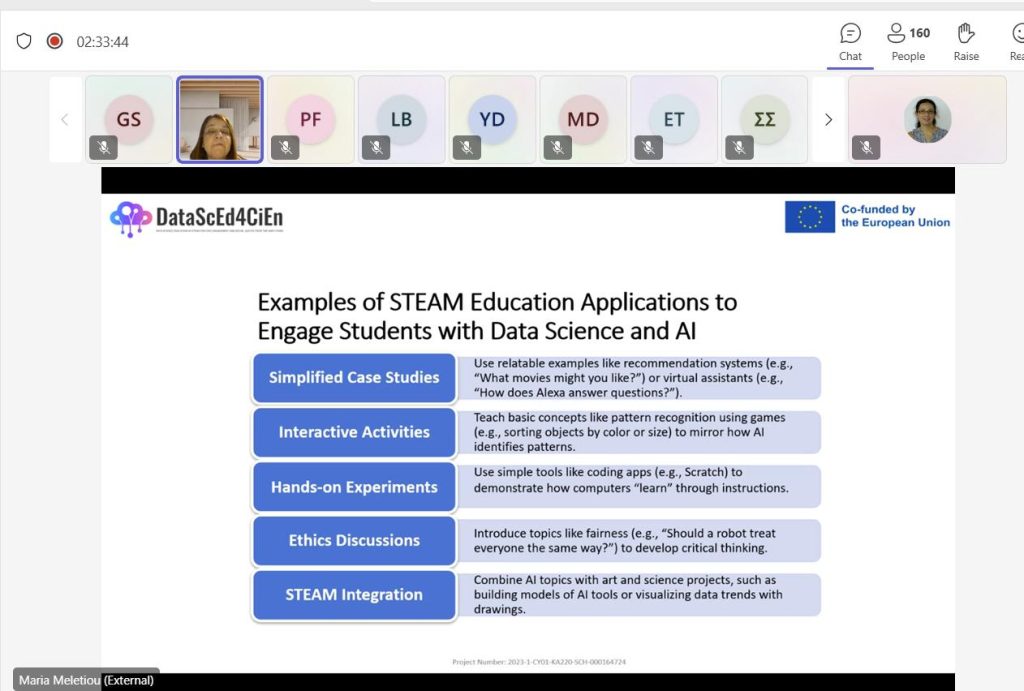
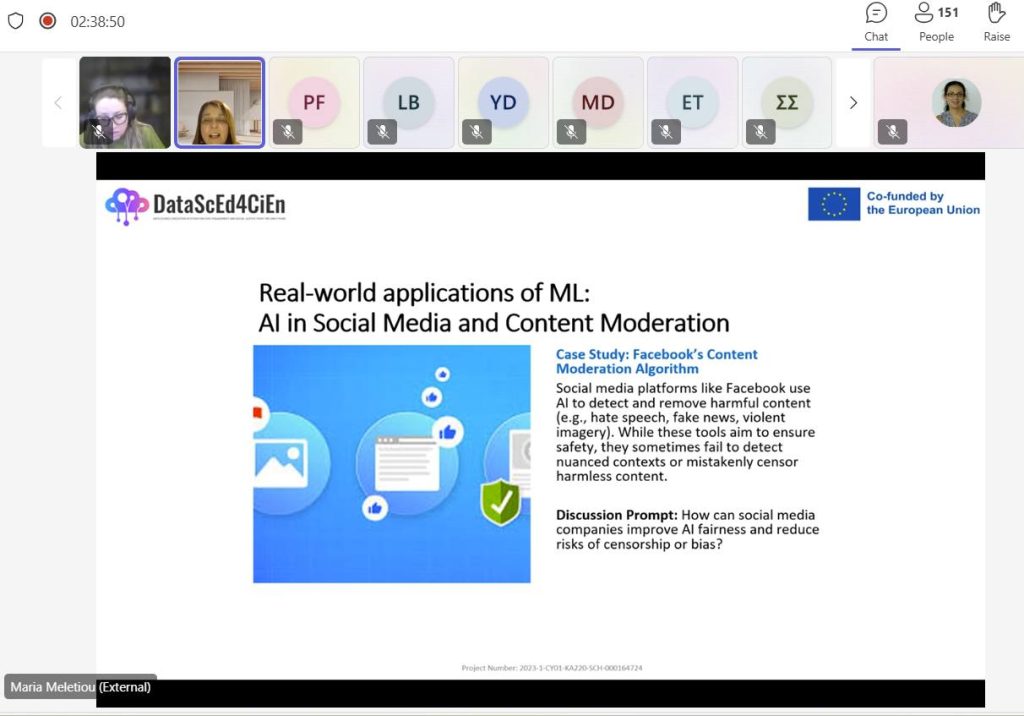
- Dr Maria Meletiou explored how AI and Machine Learning connect with data science literacy and STEAM education, highlighting real-world applications in schools
From Theory to Classroom Practice
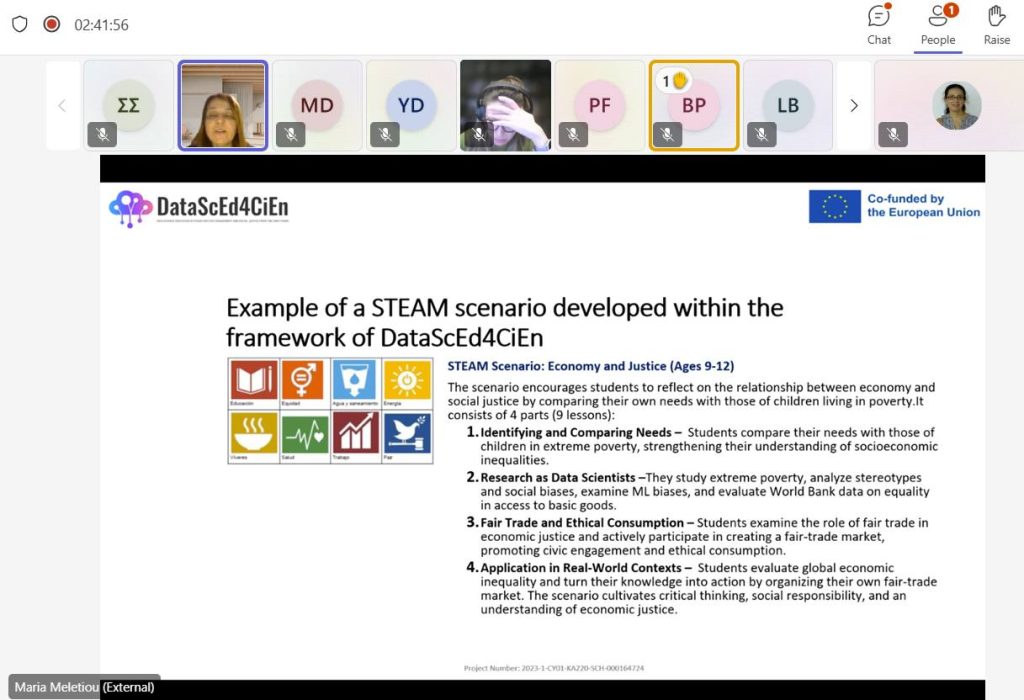
A key highlight of the session was the presentation of a STEAM learning scenario, “Economy and Justice” (ages 9–12), developed by project partner La Salle-Buen Consejo. This example illustrated how data science, social justice, and interdisciplinary learning can be effectively combined in classroom practice.
Reflection and Next Steps
Participants were encouraged to reflect on:
- The challenges of discussing ethical issues with students
- Strategies for integrating AI and data science into existing curricula
- The importance of developing thoughtful, inquiry-based learning experiences
Looking ahead, the next session (5 March 2026) will focus on:
- Applying the DataScEd4CiEn approach in real classrooms
- Aligning innovative data science practices with curriculum requirements
- Sharing teaching scenarios and experiences across partner schools
Participants were also invited to explore Module 5 on the platform, where multiple classroom scenarios are available for review and discussion.
Conclusion
The second PD session provided a rich combination of practical tools, pedagogical strategies, and emerging technologies, further empowering educators to bring data science, AI, and social justice topics into their teaching practice.
